Tiger's Eye Stone Identity Sheet
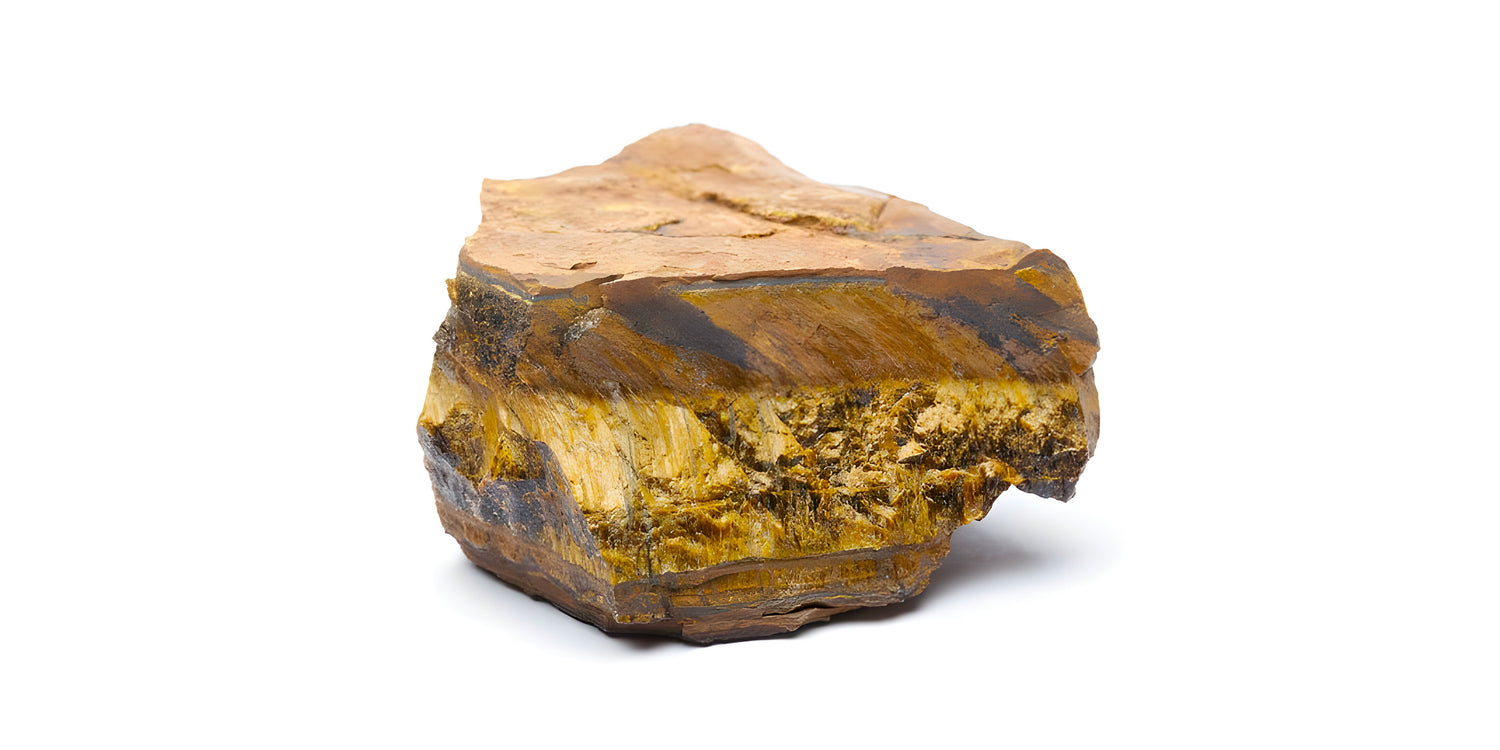
- Name origin: Tiger's eye gets its name from its shine reminiscent of a tiger's eye, with its golden and brown luminous reflections that seem to follow the observer's gaze, just like the vigilant eye of the great feline.
- Group: Quartz (Silicates).
- Chemical composition: SiO2 (silicon dioxide), with inclusions of crocidolite (blue asbestos) that have been partially or completely replaced by silicon.
- Crystal system: Rhombohedral, a variant of the trigonal crystal structure.
- Hardness: About 7 on the Mohs scale, making it a fairly durable stone for use in jewelry.
- Deposits: Mainly in South Africa, Australia, Burma (Myanmar), India, Namibia, and the United States.
- Color(s): Alternating golden and brown bands, with shimmering reflections due to its fibrous structure.
- Chakras: In spiritual traditions, tiger's eye is often associated with the solar plexus chakra (Manipura). According to these beliefs, it symbolizes self-confidence and strength of character.
Where does the name Tiger's Eye come from?
Tiger's eye, with its shimmering reflections and golden bands on a brown background, is a fascinating stone whose appearance is as mysterious as the name it bears. This evocative name is no accident and draws its origins from rich history and nature itself.
A Captivating Visual Heritage
The origin of the name "tiger's eye" is directly linked to the unique visual aspect of this gem. The stone's reflections, which range from golden to brown depending on the angle, are reminiscent of the piercing eye and majesty of a tiger. This resemblance is not simply a coincidence but the result of its composition and crystalline structure, which diffract light to create this specific shimmering effect. Thus, the name "tiger's eye" immediately evokes the image of a tiger's gaze, intense and hypnotic.
Symbolism and Meaning
Beyond its simple appearance, the name "tiger's eye" carries significant symbolic weight. Tigers are creatures that symbolize strength, courage, and protection in many cultures around the world. By naming this stone after one of the most iconic and respected animals, it has traditionally been associated with the idea of protection and insight. This name therefore reflects not only the physical aspect of the gem, but also the symbols attributed to it, such as evoking self-confidence and security for the wearer.
A Connection with Nature
The designation of tiger's eye as a precious stone strengthens our connection with the natural world. By naming this stone after an animal, we acknowledge the importance of nature in our lives and how it inspires our daily existence. This underscores a belief deeply rooted in tradition: that natural elements, including minerals and animals, carry symbolic meanings that can inspire us in a positive way.
What is the history of the Tiger's Eye stone?
Tiger's eye, this stone with shimmering reflections that captivate the eye and the imagination, holds a rich history that spans continents and civilizations. Far beyond its aesthetic appeal, tiger's eye is imbued with symbolism and mysticism, and has played various roles in cultural and spiritual practices throughout history.
Ancient Origins
The use of tiger's eye dates back thousands of years. The ancient Egyptians were among the first to recognize the value of this stone, not only for its beauty but also for the protective symbolism they attributed to it. They used it to craft amulets and jewelry intended to accompany the wearer into the afterlife, as well as to equip the eyes of their gods' statues, believing this would grant them a protective gaze.
The Warriors' Stone
In ancient times, tiger's eye was also considered a stone of war. Roman warriors wore tiger's eye talismans, believing they granted courage and protection in battle. This belief was rooted in the stone's appearance, whose reflections resemble a watchful eye, ready to anticipate and repel any threat. This use highlights the role of tiger's eye as a symbol of inner strength and vigilance.
A Stone of Trade and Discovery
In the Middle Ages, tiger's eye gained popularity not only as a protective object but also as a prized gemstone in trade. At that time, it symbolized wealth and was often exchanged or given as a gift. The trade routes established between East and West facilitated the spread of tiger's eye, contributing to its status as a precious stone and its renown in different cultures.
Spiritual and Cultural Symbolism
In many cultures, tiger's eye is symbolically associated with the earth and the sun. In spiritual traditions, this stone is often seen as a representation of the balance between yin and yang. According to these beliefs, it evokes grounding and focus, making it a valued stone to accompany meditation and personal reflection.
Tiger's Eye in the Modern World
Today, tiger's eye continues to captivate with its golden hues and deep reflections. It is widely used in jewelry for its unique beauty, but also in cultural traditions for its symbolism of protection. Its presence in popular culture and modern symbolic practices attests to the enduring appeal and importance it has held through the ages.
What is the origin and composition of Tiger's Eye stone?
Tiger's eye, this captivating gemstone with golden reflections and dark bands, draws its charm not only from its mesmerizing appearance but also from its unique geological origin and chemical composition. Exploring the origin and composition of tiger's eye offers us a fascinating insight into how nature can create wonders of incomparable beauty.
Geological Origin
Tiger's eye is mainly formed from the transformation of crocidolite, a blue asbestos, which, under the effect of alteration, is gradually replaced by quartz while retaining its fibrous structure. This process of pseudomorphism, where one mineral replaces another while keeping the original shape of the first, gives tiger's eye its characteristic silky texture and shimmering reflections. The specific conditions required for this transformation are relatively rare, making tiger's eye a truly special stone.
Chemical Composition
Chemically, tiger's eye is primarily composed of silicon dioxide (SiO2), which places it in the quartz family. The presence of iron in the altered crocidolite gives it shades ranging from golden yellow to dark brown. The fibrous structure of crocidolite, preserved during transformation, is responsible for the chatoyancy effect, or cat's eye effect, that characterizes this stone. This effect is due to the reflection of light on the parallel fibers included in the stone.
Main Deposits
The main deposits of tiger's eye are found in South Africa, Australia, India, Myanmar (Burma), Namibia, and the United States. South Africa is particularly renowned for its high-quality tiger's eye deposits, where the stone is extracted under conditions that preserve its natural beauty and unique qualities.
Variations and Colors
Although tiger's eye is generally recognized by its golden and brown bands, the stone can display a wide range of color variations depending on the exact mineral composition and the degree of alteration of the crocidolite. In addition to the traditional shades, there are variants such as hawk's eye, blue-gray, resulting from less iron oxidation, and bull's eye, reddish-brown, resulting from a greater presence of oxidized iron.
What are the symbolic meanings of Tiger's Eye stone?
Tiger's eye, this gemstone with golden reflections and deep luster, is much more than a simple precious stone. It is recognized across cultures for its rich symbolism, traditionally evoking protection and harmony. Let us take a closer look at the cultural meanings of this fascinating stone.
Physical Symbolism
In popular beliefs, tiger's eye is often associated with vitality. Historically, some traditions linked it to vision, in harmony with its name that evokes the piercing gaze of the feline. While these beliefs are rooted in folklore, they reflect the importance attributed to this stone in collective imagination.
Furthermore, in lithotherapy tradition, tiger's eye is sometimes seen as a symbol of warmth and comfort, reminiscent of the sunlit tones of its golden reflections.
Emotional Symbolism
On a symbolic level, tiger's eye is often considered a grounding stone. According to tradition, it represents the pursuit of personal balance. By evoking self-confidence, tiger's eye is traditionally seen as an emblem of courage in times of doubt.
This stone is also associated, in popular imagination, with willpower and determination. It symbolizes integrity and the ability to draw on one's inner resources during moments of decision.
Creativity and Focus
Tiger's eye is often regarded as a symbolic muse for creativity. In beliefs related to gemstones, it is thought to support creative expression. For many, wearing this stone is an aesthetic reminder of the importance of concentration and focusing on one's goals.
Protection and Positivity
One of the most famous traditions surrounding tiger's eye is its association with protection. Traditionally worn as a talisman, it symbolizes a shield against unwanted influences. In popular beliefs, tiger's eye is often seen as a good luck charm that fosters a positive environment.
How to care for your Tiger's Eye stone jewelry?
The information presented in this article is provided for cultural and informational purposes, referencing the traditions and beliefs associated with stones. It does not constitute medical advice, a diagnosis, or a promise of results. Our bracelets are fashion jewelry and are not health devices. If you have a health problem, please consult a qualified healthcare professional.