Volcanic Stone Identity Sheet
- Origin of the name: Volcanic stone gets its name from its geological origin, coming from lava emitted by volcanoes.
- Group: Volcanic stone belongs to the group of magmatic (or igneous) rocks.
- Chemical Composition: Volcanic stone is mainly composed of silicates, with elements such as silicon (Si), oxygen (O), aluminum (Al), iron (Fe), calcium (Ca), sodium (Na), potassium (K), and magnesium (Mg).
- Crystal System: Volcanic stone has an amorphous crystal system because it does not have a defined crystalline structure due to its rapid cooling.
- Hardness: The hardness of volcanic stone generally ranges between 5 and 6 on the Mohs scale.
- Deposits: Volcanic stone is mainly found in volcanic regions around the world, notably in Iceland, Hawaii, Italy (Vesuvius), and Indonesia.
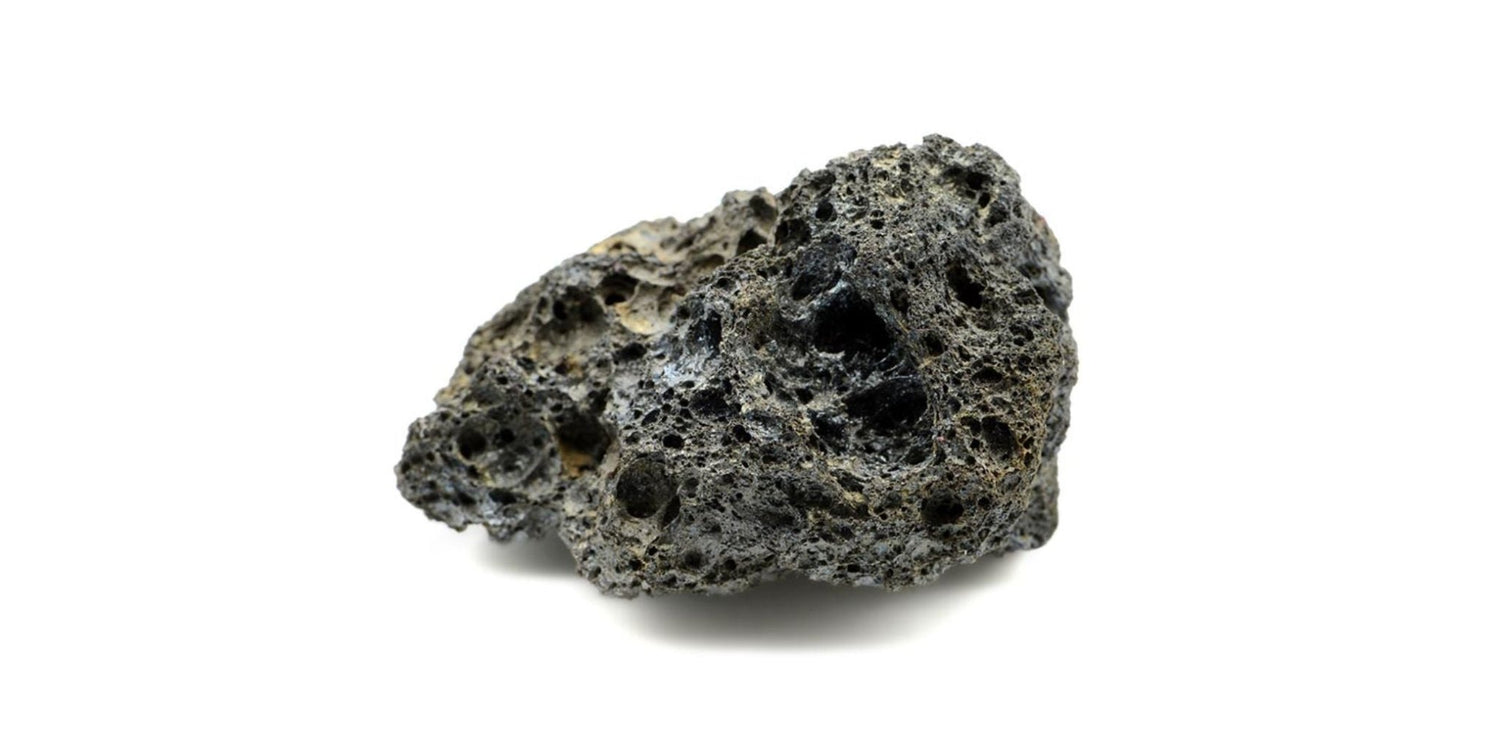
- Color(s): Volcanic stone can range from black to gray, sometimes with shades of red, brown, or green.
- Chakras: Traditionally associated with the root chakra (Muladhara).
Where does the name volcanic stone come from?
Origin of the Name
Volcanoes: The Creators of Volcanic Stone
The term "volcanic stone" has its roots in the Latin word "volcanus," which refers to Vulcan, the Roman god of fire and forge. Volcanoes are openings in the Earth's crust through which magma, volcanic ash, and gases escape. This magma, once cooled and solidified at the surface, forms volcanic rocks. The formation of these rocks is a spectacular process involving violent volcanic eruptions and lava flows, giving rise to a variety of rock formations.
Lava and Volcanic Stone
Volcanic stone is essentially made up of solidified lava. When magma, present beneath the Earth's surface, erupts, it becomes lava. This lava, once exposed to open air, cools rapidly and solidifies to form volcanic stones. The rapid cooling prevents the formation of defined crystals, giving these stones their unique and often porous texture. This process of transforming lava into rock is the basis for the term "volcanic stone."
Types of Volcanic Rocks
Basalt
Basalt is one of the most common types of volcanic rock. It forms from basaltic lava, which is rich in iron and magnesium. This rock is generally black or gray and has a fine texture. Basalt is often used in construction due to its durability.
Pumice
Pumice is another form of volcanic rock, characterized by its lightness and porosity. It forms during explosive volcanic eruptions, where gas-rich lava solidifies into a rocky foam. Pumice is commonly used in skincare products for its gentle abrasive properties.
Obsidian
Obsidian is a glassy volcanic rock formed by the rapid cooling of felsic lava. It is known for its smooth, shiny appearance, often black or very dark. Obsidian has been used since prehistoric times to make sharp tools and weapons.
Cultural and Spiritual Importance
Use in Antiquity
Since antiquity, volcanic stone has been used in various cultures to make tools, jewelry, and even in the construction of monuments. Ancient civilizations, such as the Aztecs and the Egyptians, valued these stones for their strength and durability.
Symbolism and Beliefs
In certain traditions, volcanic stone is often associated with the root chakra, symbolizing stability and grounding. Many cultures believe that this stone helps strengthen the connection with the Earth.
What is the history of volcanic stone?
Use in Ancient Civilizations
Prehistory
The earliest uses of volcanic stone date back to prehistory. Prehistoric humans used obsidian to make cutting tools and weapons, due to its ability to be shaped into sharp blades. The durability and strength of this rock made it a valuable material for hunting and daily life.
Mesoamerican Civilizations
Mesoamerican civilizations, such as the Aztecs and the Mayans, made extensive use of volcanic stone. The Aztecs, for example, used obsidian to make sacrificial knives and arrowheads. Volcanic stone was also used in the construction of temples and sculptures.
Ancient Egypt
In ancient Egypt, volcanic stone was also prized. It was used in the making of jewelry and decorative objects. The Egyptians believed that these stones possessed protective powers and used them in ritual and funerary practices.
Modern Uses
Construction and Architecture
Today, volcanic stone is widely used in construction and architecture. Basalt, in particular, is valued for its durability and resistance to weathering. It is used for paving stones, floor and wall coverings, as well as in the creation of monuments and modern sculptures.
Symbolism and Well-being
In certain traditions, volcanic stone is often associated with the root chakra, symbolizing grounding and stability. Lithotherapy enthusiasts believe that this stone helps strengthen the connection with the Earth.
Industrial Applications
Volcanic stone has also found applications in various modern industries. Pumice, for example, is used as a gentle abrasive in skincare products, while basalt is used in the production of rock wool for thermal and acoustic insulation.
What is the origin and composition of volcanic stone?
Origin of Volcanic Stone
Formation Process
Volcanic stone forms from lava emitted during volcanic eruptions. When magma, which is located beneath the Earth's surface, rises through cracks in the Earth's crust, it emerges as lava. As this lava cools rapidly in the open air, it solidifies to form volcanic stones. This rapid cooling process prevents the formation of well-defined crystals, giving volcanic stone its unique and often porous texture.
Formation Environment
Volcanic stones form in various environments, mainly around active volcanoes. Geologically active regions such as Iceland, Hawaii, Italy (with volcanoes like Vesuvius), and Indonesia are known for their abundant volcanic stone formations. Volcanic eruptions can be explosive or effusive, each producing different types of volcanic rocks.
Composition of Volcanic Stone
Minerals and Elements
The chemical composition of volcanic stone varies depending on the type of lava from which it originates. In general, volcanic stones are mainly composed of silicates, which are minerals containing silicon and oxygen. Common elements found in volcanic stones include:
- Silicon (Si)
- Oxygen (O)
- Aluminum (Al)
- Iron (Fe)
- Calcium (Ca)
- Sodium (Na)
- Potassium (K)
- Magnesium (Mg)
Structure and Texture
The structure of volcanic stones is generally amorphous, which means they do not have a defined crystalline structure. This is due to the rapid cooling of lava, which prevents the formation of crystals. The texture of volcanic stones can range from fine and dense, like basalt, to porous and light, like pumice stone.
What are the symbolic meanings of volcanic stone?
Symbolism of Volcanic Stone
Grounding and Stability
Traditionally, volcanic stone is perceived as a symbol of grounding and stability. It is often associated with strength and connection to the Earth.
Protection
In certain cultures, volcanic stone is considered a symbol of protection. It is often used in ritual practices to ward off negative influences.
Energy and Vitality
Volcanic stone is sometimes seen as a symbol of energy and vitality, due to its dynamic and powerful volcanic origin.
How to care for your volcanic stone jewelry?
Cleaning Volcanic Stone Jewelry
Regular Cleaning
To clean your volcanic stone jewelry, use a soft, dry cloth. Avoid using harsh chemicals that could damage the stone. Regular cleaning helps remove dust deposits and maintain the stone's natural shine.
Deep Cleaning
For a deeper cleaning, prepare a solution of lukewarm water and mild soap. Soak a soft cloth in this solution and gently wipe the volcanic stone. Then rinse the jewelry with lukewarm water and dry it with a clean cloth. Make sure to dry the stone thoroughly to avoid any moisture residue.
Symbolic Maintenance
Symbolic Maintenance Methods
For those who wish to maintain the symbolic aspect of the stone, it is possible to purify it symbolically using traditional methods such as:
- Water: Rinse the stone under running water for a few minutes.
- Smudging: Use sage or palo santo to pass the stone through the smoke.
- Salt: Place the stone on a bed of salt for a few hours.
Maintenance Frequency
Care for your volcanic stone jewelry at least once a month, or more frequently if you wear it often. This regular care ritual, purely symbolic and traditional, also helps preserve the shine and beauty of the stone.
Storing Volcanic Stone Jewelry
Avoid Scratches
Store your volcanic stone jewelry separately from other jewelry to avoid scratches and damage. Use soft fabric pouches or velvet-lined jewelry boxes to protect them.
Protection Against Humidity
Volcanic stone can be sensitive to excessive humidity. Avoid storing your jewelry in damp places, such as the bathroom. A dry, cool environment is ideal to preserve the integrity of the stone.
Handling and Wearing Volcanic Stone Jewelry
Avoid Chemicals
Remove your volcanic stone jewelry before using chemicals, such as lotions, perfumes, or cleaning products. These substances can dull the stone and reduce its durability.
Physical Activities
Avoid wearing your volcanic stone jewelry during intense physical activities, such as sports or gardening. Sweat and impacts can damage the stone and affect its shine.
Discover Our Collection
Taking care of your volcanic stone jewelry is essential to preserve its beauty. By following these cleaning, symbolic care, storage, and handling tips, you can extend the life of your jewelry.
To discover our collection of volcanic stone bracelets, explore our volcanic stone bracelets for women and our volcanic stone bracelets for men. Our unique and elegant designs will complement your style while offering you the symbolism of this exceptional stone.
The information presented in this article is provided for cultural and informational purposes, referencing the traditions and beliefs associated with stones. It does not constitute medical advice, a diagnosis, or a promise of results. Our bracelets are fashion jewelry and are not health devices. If you have a health problem, please consult a qualified healthcare professional.