Lapis-Lazuli Stone Identity Card
- Origin of the name: The name comes from the Latin "lapis" for stone and the Persian "lâzhward" for blue.
- Group: The stone belongs to the silicate group.
- Chemical Composition: The chemical composition is Na₈(Al₆Si₆O₂₄)S₂ with inclusions of calcite, pyrite, sodalite, and lazurite.
- Crystal System: The crystal system is cubic.
- Hardness: The hardness ranges from 5 to 6 on the Mohs scale.
- Deposit(s): The main deposits are found in Afghanistan, Chile, Russia, the United States, and Pakistan.
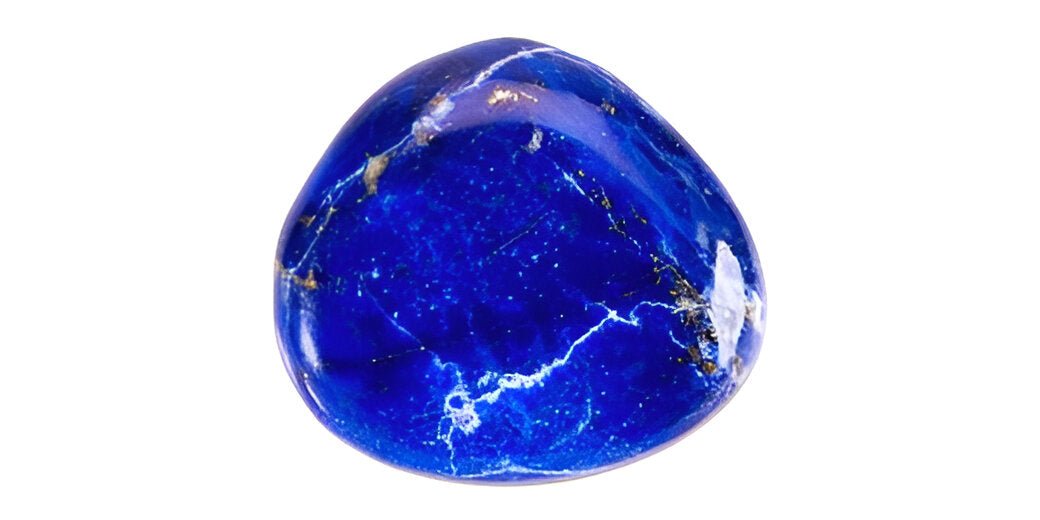
- Color(s): The color is deep blue with golden pyrite inclusions and white calcite veins.
- Chakras: In spiritual traditions, the stone is often associated with the third eye (Ajna) and the throat chakra (Vishuddha).
Where does the name Lapis-Lazuli come from?
Origin of the Name
The name Lapis-Lazuli has its roots in two ancient languages: Latin and Persian. The term "Lapis" in Latin means "stone," highlighting the mineral nature of this gem. "Lazuli" derives from the Persian "lâzhward," meaning "blue," referring to the characteristic color of the stone. This name thus combines the concepts of stone and blue, perfectly describing this prized gem.
Historical Importance
Lapis-Lazuli has a rich history of use and veneration across different civilizations. The Ancient Egyptians used it to make amulets and jewelry, traditionally attributing protective and spiritual symbolism to it. Mesopotamian civilizations associated it with deities and used it to create cylinder seals and figurines. During the Middle Ages, Lapis-Lazuli was imported into Europe, where it was used to produce the precious ultramarine blue pigment for Renaissance artworks.
Etymology and Linguistic Evolution
The word "Lapis-Lazuli" has evolved over centuries and across languages. In Latin, "lapis" means "stone," while "lazuli" comes from the Persian "lâzhward," meaning "blue." This term has influenced many languages, notably the Arabic "azul" and the Spanish "azul" to designate the color blue. This linguistic evolution reflects the long history and significance of this stone in different cultures and eras.
What is the history of Lapis Lazuli?
Ancient Origins
Lapis Lazuli, a deep blue semi-precious stone, has captivated humanity for millennia. Its origins date back to Antiquity, with evidence of its use over 6,000 years ago. The first deposits of Lapis Lazuli were discovered in the Hindu Kush mountains, located in present-day Afghanistan, a place still renowned for producing this precious stone. The Sumerians and Babylonians were among the first to value Lapis Lazuli. They used this stone to create cylinder seals, jewelry, and religious objects. Associated with the goddess Inanna, symbol of love and beauty, this stone was also seen as a symbol of divine power. Sumerian tablets mention Lapis Lazuli, indicating its economic and cultural importance.
Ancient Egypt
Ancient Egypt is another civilization where Lapis Lazuli was held in high esteem. The Egyptians imported it from Afghanistan to create amulets, scarabs, and jewelry. Lapis Lazuli also adorned funerary masks, the most famous being that of Tutankhamun. In Egyptian mythology, the stone was associated with the goddess Ma'at, symbol of truth and justice. The Egyptians believed that Lapis Lazuli had a protective and spiritual dimension, making it one of the most precious stones in their culture.
Use in the Middle Ages and the Renaissance
During the Middle Ages, Lapis Lazuli reached Europe via trade routes connecting Central Asia to the West. This stone was so prized that it was often more expensive than gold. Renaissance artists used the ultramarine blue pigment, extracted from Lapis Lazuli, to create skies and garments in their paintings. This pigment was highly sought after for its intensity and durability. Masters such as Leonardo da Vinci and Michelangelo used this pigment in their works, further increasing the demand and value of Lapis Lazuli. In medieval Europe, Lapis Lazuli was also associated with the Virgin Mary, who was often depicted wearing blue in religious artworks. The ultramarine pigment was used to illustrate purity and holiness, reinforcing the symbolic and spiritual importance of Lapis Lazuli in sacred art.
Modern Era
In modern times, Lapis Lazuli continues to be prized for its beauty and spiritual symbolism. Explorers and scientists have deepened their knowledge of this stone, discovering new deposits in South America, particularly in Chile. Chilean Lapis Lazuli, although slightly different in composition, is also highly valued on the world market. Today, Lapis Lazuli is used not only in jewelry but also in cultural traditions, where it is often seen as a symbol of harmony and serenity. Gemstone enthusiasts appreciate it for its unique color and golden pyrite inclusions, which add to its beauty. In addition, Lapis Lazuli is often used in decorative objects and works of art, continuing to inspire artists and craftsmen.
What is the origin and composition of the stone Labradorite?
Origin of Lapis Lazuli
Lapis Lazuli, a deep blue semi-precious stone, has captivated humanity for millennia. Its origins date back to Antiquity, with evidence of its use over 6,000 years ago. The first Lapis Lazuli deposits were discovered in the Hindu Kush mountains of Afghanistan, a place still renowned for producing this precious stone. These deposits are among the oldest known and supplied the stone to ancient civilizations such as the Sumerians, Egyptians, and Greeks. Afghanistan remains today the world's main supplier of high-quality Lapis Lazuli. The stone was transported along ancient trade routes, notably the Silk Road, which connected Asia to Europe.
Cultural Importance
In ancient Egypt, Lapis Lazuli was imported from Afghanistan and used to create amulets, jewelry, and funerary ornaments. The Egyptians associated the stone with the goddess Ma'at, symbol of truth and justice. The famous funerary mask of Tutankhamun is inlaid with Lapis Lazuli, attesting to its great value and spiritual significance. The Sumerians and Babylonians used Lapis Lazuli to make cylinder seals and religious figurines. The Greeks and Romans also appreciated it, especially for its decorative and symbolic qualities. In medieval Europe, Lapis Lazuli was ground to obtain the ultramarine blue pigment, used by Renaissance artists.
Chemical Composition
Lapis Lazuli is a metamorphic rock composed mainly of lazurite, a sulfur and sodium silicate (Na₈(Al₆Si₆O₂₄)S₂). Lazurite gives the stone its characteristic intense blue color. In addition to lazurite, Lapis Lazuli contains other minerals such as calcite, pyrite, and sometimes sodalite. Lazurite is the main component of Lapis Lazuli, often representing between 25% and 40% of the stone's total composition. It is the presence of sulfur in lazurite that gives Lapis Lazuli its deep blue color. The higher the concentration of lazurite, the higher the quality and desirability of the stone.
Geological Formation
Lapis Lazuli forms through metamorphic processes in limestone rocks. The formation of this stone requires specific geological conditions, notably the presence of high pressure and temperature. Lapis Lazuli deposits are generally found in geological contexts where sedimentary rocks have been deeply buried and metamorphosed. The rarity of high-quality Lapis Lazuli is due to the complexity of these formation conditions. The extraction of Lapis Lazuli in mountainous and often inaccessible regions also adds to its rarity and value. Traditional extraction methods, combined with modern techniques, help preserve the quality of the stone while increasing production efficiency.
What is the symbolism of Lapis Lazuli?
Symbolism and Traditions of Lapis Lazuli
A Stone of Wisdom
In ancient traditions, Lapis Lazuli is often seen as a symbol of wisdom and nobility. It was traditionally associated with royalty and spiritual elevation, representing the starry celestial vault thanks to its pyrite inclusions.
Elegance and Depth
Aesthetically, this stone captivates with its deep, intense blue color. It is often used in jewelry to create elegant pieces that catch the eye and enhance the natural beauty of the wearer.
A Symbol of Truth
According to popular beliefs, Lapis Lazuli is traditionally associated with truth and authenticity. In the world of gemstones, it is reputed to inspire honesty and encourage personal expression through art and communication.
Beliefs and Aesthetics of Lapis Lazuli
Creative Inspiration
In the collective imagination, Lapis Lazuli is often linked to creative inspiration. Artists and writers have long considered it a mineral muse, reputed to symbolize the awakening of imagination and clarity of ideas.
Visual Softness
The visual appearance of this stone offers a sense of softness and aesthetic harmony. Its deep blue shades, reminiscent of the ocean or the night sky, make it a highly appreciated fashion accessory to bring a touch of serenity to any outfit.
Tradition of Intuition
Lapis Lazuli is traditionally associated with intuition in various cultures. According to these ancient beliefs, wearing this stone symbolizes a deeper connection with oneself and a better understanding of the world around us.
Symbolic and Cultural Harmony
Symbol of Harmony
In lithic tradition, Lapis Lazuli is often seen as a symbol of harmony. It is reputed to represent balance and inner peace, making this stone a popular choice for those who appreciate meaningful jewelry.
Protective Tradition
Historically, many civilizations have attributed protective symbolism to Lapis Lazuli. It was often worn as an amulet or talisman, reflecting popular beliefs that it would watch over its wearer.
Association with the Throat Chakra
In Eastern spiritual practices, Lapis Lazuli is traditionally associated with the throat chakra. According to these beliefs, it symbolizes fluid communication and sincere expression, although it is above all a beautiful cultural allegory.
How to Wear and Appreciate Lapis Lazuli
Jewelry and Accessories
Wearing Lapis Lazuli as necklaces, bracelets, or earrings allows you to showcase your personal style while enjoying the timeless elegance of this stone every day.
A Meditation Companion
For those who practice meditation, holding a Lapis Lazuli can serve as a visual or tactile focal point. Its natural beauty is often appreciated for creating a space conducive to reflection and relaxation.
Decoration and Environments
Lapis Lazuli is also an excellent choice for interior decoration. Placing this stone in your living or working environment adds a touch of refined color and helps create a visually harmonious atmosphere.
How to care for your Lapis Lazuli stone jewelry?
Cleaning Lapis Lazuli Jewelry
To maintain the shine of your Lapis Lazuli jewelry, clean it regularly with a soft, slightly damp cloth. Avoid chemicals and abrasives. Use mild soap and lukewarm water, rinse with clear water, then dry with a clean cloth.
Proper Storage of Lapis Lazuli Jewelry
Store each piece of jewelry separately in a fabric pouch or a lined jewelry box. Avoid stacking them to prevent scratches. Keep them away from direct sunlight and extreme temperatures.
Avoid Chemicals
Lapis Lazuli is sensitive to chemicals and acids. Do not wear your jewelry when using cleaners, perfumes, lotions, or hair products. Put your jewelry on last after getting ready and remove it before any activity involving chemicals.
Symbolic Care of Lapis Lazuli Jewelry
In stone traditions, some people like to symbolically cleanse their jewelry by running it under clear water or using white sage smoke. It is also customary to expose them to moonlight overnight for symbolic recharging, while avoiding direct sunlight to preserve their color.
Discover Our Lapis Lazuli Bracelet Collection
Taking care of your Lapis Lazuli jewelry ensures its longevity and beauty. Discover our collection of women's Lapis Lazuli stone bracelets and our collection of men's Lapis Lazuli stone bracelets. Each piece is carefully crafted to highlight this precious stone. Explore our collections to find the perfect bracelet, adding a touch of elegance and symbolism to your style.
The information presented in this article is provided for cultural and informational purposes, referencing the traditions and beliefs associated with stones. It does not constitute medical advice, a diagnosis, or a promise of results. Our bracelets are fashion jewelry and are not health devices. If you have a health issue, please consult a qualified healthcare professional.