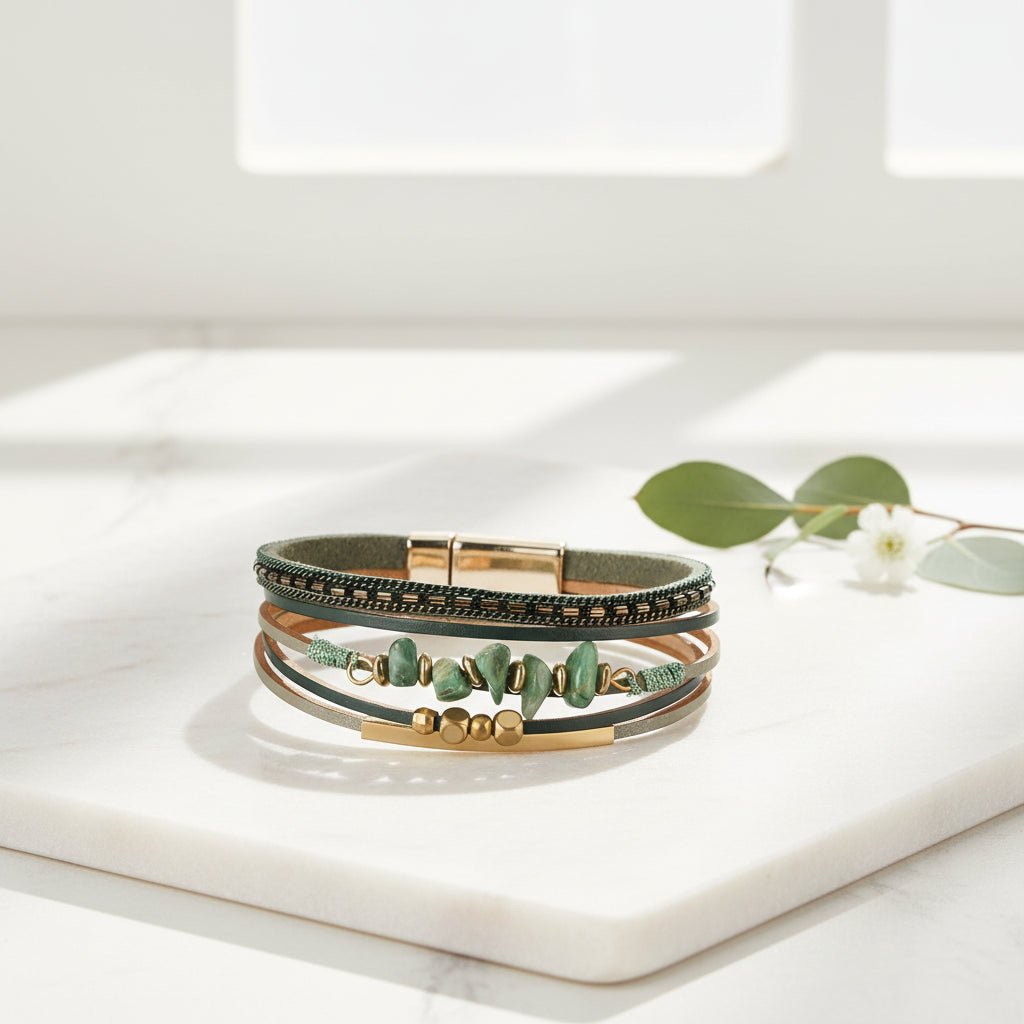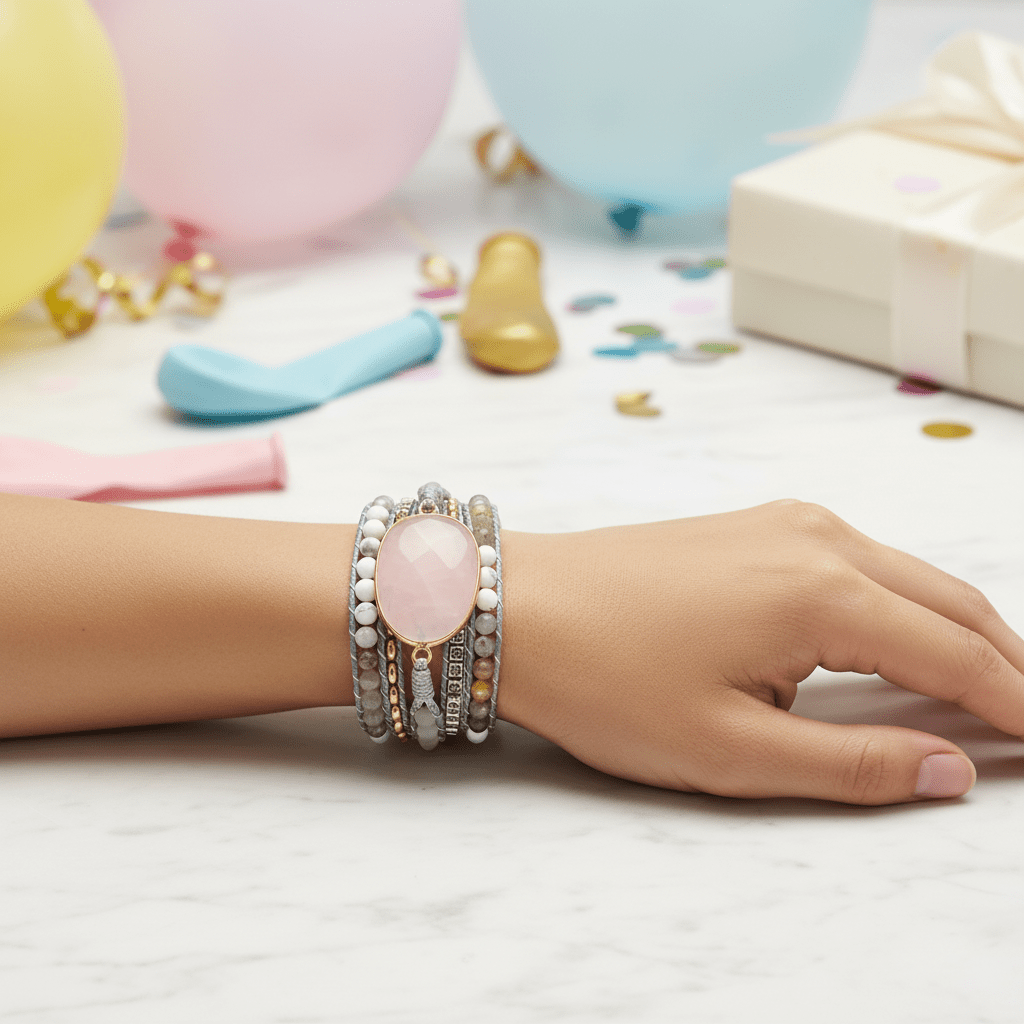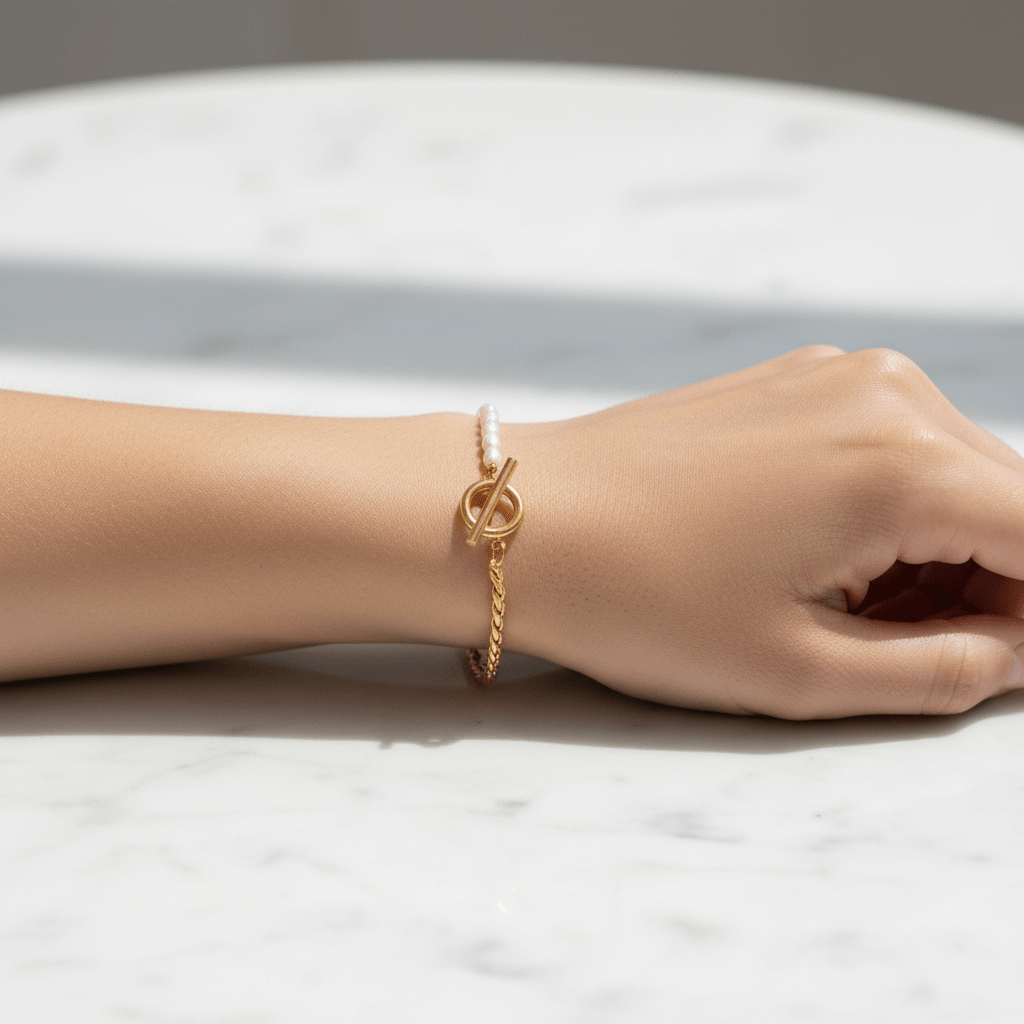
- The most resistant materials: Titanium, 316L stainless steel, and natural fibers (cotton, cord) are perfectly resistant to seawater and salt without oxidizing or tarnishing.
- To absolutely avoid: Untreated 925 silver, brass, copper, and thin gold plating (less than 3 microns), which are quickly damaged by contact with salt and chlorine.
- The best choice: 18-carat gold-plated titanium bracelets offer the perfect balance between luxurious aesthetics and marine resistance.
- Essential care: Always rinse with fresh water after each swim to extend the life of any bracelet, even the most resistant.
Summer is approaching, and with it comes the question every jewelry lover asks: can I really wear my bracelets at the beach without damaging them? Between salty waves, abrasive sand, and the blazing sun, our precious accessories are put to the test. However, giving up your style during the holidays is not inevitable.
At La Boutique du Bracelet, we have thoroughly analyzed the technical characteristics of each material to offer you this comprehensive guide. You will discover not only which bracelets truly withstand seawater and salt, but also how to choose them according to your style and care for them so they last through many summers. Get ready to dive in without worry!
Understanding the impact of seawater and salt on jewelry
Why is salt water so aggressive for metals?
Seawater contains about 35 grams of salt per liter, mainly sodium chloride, but also magnesium, calcium, and potassium. This complex chemical composition creates a highly corrosive environment for many metals. The oxidation process speeds up considerably in the presence of salt, turning a shiny bracelet into a dull, greenish piece after just a few exposures.
Salt acts as an electrolytic catalyst: it facilitates the transfer of electrons between metal and oxygen, accelerating corrosion up to five times faster than in fresh water. That’s why a bracelet that survives perfectly in the pool can quickly succumb during a seaside vacation.
The three main enemies of your bracelets at the beach
Beyond salt, your jewelry faces three combined threats that amplify the damage:
1. Sand abrasion: Micro-particles of silica scratch polished surfaces and get into the links, creating friction that wears down the finish. A bracelet regularly exposed to sand loses its shine twice as fast.
2. Solar UV rays: Ultraviolet rays degrade certain coatings and accelerate the oxidation of metals. They can also discolor natural stones and cultured pearls.
3. Heat: High temperatures expand metals and can weaken welds. Combined with sweat (which is also salty), heat creates a particularly aggressive mix.
The top materials for marine resistance
Titanium: the essential ally for swimmers
Titanium is now considered the ultimate in seawater-resistant metals. Used in the naval and aerospace industries, this metal naturally forms a protective oxide layer that makes it virtually indestructible against corrosion. Even after months submerged in the ocean, titanium retains its structural integrity and appearance.
Its exceptional lightness (45% lighter than steel) also makes it an ideal choice for beach bracelets: you forget you are wearing it, even in the water. The Marine mesh bracelet, gold-plated titanium, Alicia model perfectly illustrates this combination of technical strength and summer elegance, with its mesh reminiscent of anchor chains.
316L stainless steel: the optimal quality-to-durability ratio
316L stainless steel, also known as "surgical steel" or "marine steel", contains molybdenum, which gives it exceptional resistance to chlorides. It is the same alloy used for boat hulls and professional diving equipment.
Unlike standard steel, which rusts quickly, 316L withstands years of exposure to salt water without showing any signs of corrosion. Its shiny appearance lasts, and it does not cause any allergic reactions. The Stainless steel bracelet, eagle head clasp, Marian model and the Stainless steel bracelet, enraged wolf head clasp, Zack model are perfect examples of this masculine durability that fears neither the waves nor adventure.
Natural fibers: the bohemian and waterproof option
Sometimes, the simplest solution is also the best. Bracelets made of cotton, linen, or cord are naturally resistant to seawater because they contain no metal that could oxidize. They dry quickly in the sun, and their “lived-in” look is part of their charm.
The Trio of Tibetan good luck bracelets, in cotton, cord, and silver, for men, Vasco model combines this natural resistance with treated silver elements, creating a relaxed look perfect for days of surfing or lounging.
Materials to avoid for swimming
925 silver: beautiful but fragile
Sterling silver, despite its timeless beauty, reacts very poorly to seawater. It tarnishes quickly, developing a black patina (silver sulfide) that can become permanent without proper care. Even anti-tarnish treatments have limited effectiveness against sea salt.
If you absolutely want to wear silver at the beach, stick to models where the silver is protected by other materials or always remove your bracelet before swimming.
Thin gold plating: beware of microns
Not all gold plating is created equal. Plating of less than 3 microns will wear out quickly when exposed to salt and sand, revealing the base metal after just a few weeks of intensive use. In contrast, plating of 5 microns or more, on a titanium or 316L steel base, offers respectable durability.
That’s why at La Boutique du Bracelet, we favor titanium bases for our gold-plated models, such as the 18-carat gold-plated titanium heart-link chain bracelet, Alva model, which combines the brilliance of gold with the indestructibility of titanium.
Copper and brass: false friends
These vintage-inspired metals are the worst enemies of saltwater. Copper quickly develops verdigris (copper acetate), while brass darkens and can leave marks on the skin. Even a single swim can be enough to irreversibly damage these pieces of jewelry.
Comparison table: which bracelet for which use?
| Model | Main material | Saltwater resistance | Style | Ideal for |
|---|---|---|---|---|
| Alicia | Gold-plated titanium | ⭐⭐⭐⭐⭐ | Chic nautical | Daily swimming |
| Alva | 18-carat gold-plated titanium | ⭐⭐⭐⭐⭐ | Romantic | Beach & evening events |
| Éloïse | Gold-plated titanium + zircons | ⭐⭐⭐⭐ | Festive colorful | Beach clubs |
| Luna | Titanium + natural pearls | ⭐⭐⭐⭐ | Elegant bohemian | Occasional swimming |
| Marian | Stainless steel | ⭐⭐⭐⭐⭐ | Bold masculine | Water sports |
| Zack | Stainless steel | ⭐⭐⭐⭐⭐ | Wild rock | Extreme adventures |
| Vasco | Cotton, cord, silver | ⭐⭐⭐⭐ | Spiritual boho | Surf & yoga |
| Camilla | Gold link + freshwater pearls | ⭐⭐⭐ | Refined chic | Poolside |

Care guide: keep your bracelets looking their best all summer
Essential steps after every swim
Even the most durable bracelets deserve a minimum of care to stay beautiful all summer. Here is the 3-step ritual to adopt:
1. Immediate rinsing: As soon as possible after swimming, rinse your bracelet under fresh water for 30 seconds. This simple step removes salt crystals before they settle and start corroding.
2. Gentle drying: Dab with a soft, lint-free cloth. Avoid vigorous rubbing, especially on polished finishes or stones. Let air dry in the shade, never in direct sunlight.
3. Weekly inspection: Check clasps, links, and settings. Salt can seep into crevices and weaken assemblies over time.
Products to use (and those to avoid)
For a deeper clean, use only:
- Lukewarm water with a drop of mild Marseille soap
- Soft toothbrush (extra-soft bristles) for the links
- Microfiber cloth for the final polish
Absolutely avoid: toothpaste (abrasive), household cleaners, 90% alcohol, vinegar on pearls, and ultrasonic baths for jewelry with stones or glued elements.
Smart storage while traveling
On vacation, store your bracelets in an individual fabric pouch rather than all together in a case. This prevents scratches between jewelry and moisture buildup. A pro tip: slip in a small silica packet (the kind found in shoe boxes) to absorb any residual moisture.
2024 Trends: beach bracelets making a splash
The return of the bold nautical style
This season, marine links and anchor chains are the standout trend for beach accessories. Far from clichés, they come in sleek, modern versions that transition effortlessly from swimwear to evening dresses. The Alicia model perfectly embodies this wave, with its titanium marine link reminiscent of luxury yacht moorings.
Mixing materials: when metal meets nature
Designers play with contrasting textures: polished titanium paired with natural pearls, brushed steel complemented by braided fibers. The Harmonious titanium bracelet with natural pearls, Luna model elegantly represents this trend, combining technical durability with the organic softness of pearls.
Bright colors on a waterproof base
Forget monochrome jewelry! Colored zirconia and enamel add a perfectly summery touch of cheerfulness. The 18-carat gold-plated titanium bracelet with colored zirconia stones, Éloïse model captures this festive energy while ensuring optimal water resistance.
Pearls and stones: how to protect them at the beach?
Freshwater pearls and seawater
Paradoxically, freshwater pearls do not tolerate saltwater well. Their porous nacre absorbs salt, which can create micro-cracks and alter their characteristic luster. The Chic mesh bracelet with freshwater pearls, Camilla model is ideal for terrace drinks or poolside, but should be removed for prolonged swimming in the sea.
If you wear pearls at the beach, limit exposure to 15-20 minutes maximum and rinse immediately with fresh water. Pearls are also sensitive to sunscreen: apply your protection, let it absorb, then only put on your jewelry.
Zirconia and synthetic stones: the smart solution
Unlike natural stones, cubic zirconia is perfectly resistant to seawater. Its artificial crystalline structure does not have the inclusions and micro-cracks of natural gems where salt could seep in. They retain their shine and color even after dozens of swims.

FAQ: Your questions about beach bracelets
Can I wear my titanium bracelet every day at the beach for 2 weeks of vacation?
Yes, absolutely. Titanium is designed to withstand years of marine exposure without alteration. A simple daily rinse with fresh water is enough to maintain its shine. It is the material of choice for vacationers who do not want to worry about their jewelry.
Can stainless steel rust when exposed to seawater?
316L stainless steel (marine grade) does not rust, even when submerged for months. However, lower-quality steels may show signs of corrosion. Always check that your bracelet is made of 316L steel or "surgical steel" for guaranteed durability.
How can I tell if my gold-plated bracelet will withstand the beach?
The key is the base metal and the thickness of the plating. Gold plating on titanium or 316L steel with a layer of 3 microns or more will last for several summers. Plating on brass with less than 1 micron will be damaged after the first swim. At La Boutique du Bracelet, all our gold plating is done on a titanium base.
Do rope or cotton bracelets smell bad after swimming?
No, as long as you let them dry thoroughly in the open air after each use. Natural fibers dry quickly in the sun. If an odor appears, washing with fresh water and Marseille soap followed by complete drying will solve the problem.
Should you remove your bracelet before applying sunscreen?
Ideally, yes. UV filters and the oils in sunscreen can leave a film on metals and dull the finish over time. Apply your sunscreen, let it absorb for 10 minutes, then put on your bracelets. Your jewelry and your skin will thank you.
My favorite bracelet isn't waterproof: what should I do at the beach?
Invest in a dedicated beach bracelet! It's the perfect opportunity to try a different style for summer while protecting your precious pieces. Titanium or stainless steel bracelets offer an excellent alternative without sacrificing elegance.
Conclusion: enjoy summer without compromising on style
Choosing a bracelet resistant to seawater is no longer a matter of sacrificing style. Thanks to advances in materials like titanium and 316L stainless steel, you can now dive into Mediterranean or Atlantic waves while wearing jewelry that is both elegant and durable.
Whether you choose the golden elegance of the Alva model, the nautical spirit of the Alicia model, or the bold durability of the Marian model, La Boutique du Bracelet is here to accompany you on your summer adventures with pieces designed to withstand everything the season brings.
Don't wait any longer to create your beach bracelet collection: summer won't wait, and neither will your wrists!