



- Regular cleaning: Use a soft microfiber cloth after each wear and a bath of warm soapy water once a month to remove oxidation.
- Preventing tarnish: Store your silver jewelry in an anti-tarnish pouch, away from humidity and chemicals (perfumes, creams).
- Effective natural tips: Baking soda, white toothpaste, or lemon juice can revive the shine of tarnished silver without damaging it.
- Recommended frequency: Light weekly maintenance and a thorough monthly cleaning ensure lasting shine for years.
Silver is one of the most cherished precious metals in women's jewelry for millennia. Its natural shine, timeless elegance, and versatility make it a preferred choice for bracelets. However, this noble metal has a particularity that may discourage some: it oxidizes upon contact with air and gradually tarnishes. This natural chemical reaction, called sulfuration, transforms the silvery surface into a dark patina that can appear unsightly.
Fortunately, with the right care techniques, your women's silver bracelets can retain their original shine for decades. At La Boutique du Bracelet, we support our customers in preserving their precious jewelry. This comprehensive guide reveals all the professional methods and traditional tips to clean, protect, and restore the shine of your silver bracelets. Whether you own a solid 925 silver bracelet, a silver-plated piece, or a bracelet adorned with stones, you will find advice here tailored to every situation.
Understanding silver oxidation: why your bracelets tarnish
The chemical process of sulfuration
Silver naturally reacts with sulfur compounds present in the ambient air, forming silver sulfide on its surface. This phenomenon, known as sulfuration or tarnishing, appears as a gradual layer that turns yellow, then brown, and finally black on the metal. Unlike iron rust, which destroys the metal deeply, silver sulfuration remains superficial and is completely reversible with proper care.
The speed of this tarnishing depends on several environmental factors. Humidity significantly accelerates the process, as does air pollution in urban areas. Environments rich in sulfur, such as those near industrial zones or volcanic regions, cause the metal to darken more quickly. Even certain foods like eggs, which are high in sulfur compounds, can speed up oxidation if you handle your jewelry after cooking them.
Aggravating factors in daily life
Your lifestyle directly influences how long your bracelets retain their shine. Perspiration, naturally acidic and containing mineral salts, attacks the surface of silver on a daily basis. Cosmetics are another formidable enemy: perfumes, moisturizers, hair sprays, and makeup contain chemical agents that react with the precious metal. Applying these products directly to a bracelet, or even accidental contact, is enough to accelerate tarnishing.
Household products also represent an underestimated danger. Bleach, ammonia, and harsh detergents can not only tarnish silver but also irreversibly damage it. Contact with rubber, found in some elastics or gloves, causes a particularly aggressive reaction that leaves stubborn black marks. Finally, certain medications alter the composition of perspiration and can intensify oxidation in people undergoing treatment.
Professional cleaning methods for silver bracelets
Gentle daily cleaning
The first golden rule for caring for silver jewelry is to wipe it after each use. A simple soft microfiber cloth, gently passed over the entire surface of the bracelet, removes traces of perspiration, cream residue, and dust particles before they have time to react with the metal. This gesture, which takes only a few seconds, is the best prevention against premature tarnishing.
For a more thorough weekly cleaning, prepare a bath of lukewarm water with a few drops of Marseille soap or mild dishwashing liquid. Immerse your bracelet for five to ten minutes, then gently scrub with a soft toothbrush to reach the corners and links of the chain. Rinse thoroughly with clean water and dry immediately with a clean cloth. As residual moisture encourages oxidation, never let a silver piece dry in the open air.
Specialized cleaning solutions
Jewelry stores offer products specifically formulated for the care of silver. Liquid cleaning baths quickly remove oxidation in just a few seconds of immersion. These solutions generally contain thiourea acid, which dissolves silver sulfide without attacking the underlying metal. Be sure to follow the manufacturer's instructions regarding immersion time, as prolonged contact could damage certain alloys or set stones.
Impregnated cloths are a practical alternative for regular maintenance. These fabrics contain cleaning and polishing agents that remove tarnish while depositing a thin protective anti-oxidation layer. They are particularly effective for slightly tarnished bracelets and help maintain shine between more thorough cleanings. Store them in their airtight packaging to preserve their effectiveness.
Polishing to restore shine
When simple cleaning is no longer enough to restore the original shine, polishing becomes necessary. Use a special silver polishing paste, available at jewelers or hardware stores. Apply a small amount to a soft cloth and rub the bracelet using regular circular motions. This mechanical action removes the thin layer of sulfide while smoothing out the superficial micro-scratches that dull the appearance of the metal.
However, be careful not to overdo the polishing. This technique removes a tiny amount of metal with each use. For a thick solid silver bracelet, this poses no problem for decades. However, for silver-plated or very finely crafted jewelry, polishing too frequently or too vigorously could wear away the precious metal layer. Reserve this method for significant tarnishing, no more than once or twice a year.
Natural tips for cleaning your silver bracelets
The baking soda method
Baking soda is the number one ally for the natural care of silver jewelry. For effective cleaning, mix three tablespoons of baking soda with one tablespoon of water to obtain a thick paste. Apply this mixture to your bracelet using a soft cloth or an old toothbrush. Gently rub, paying special attention to tarnished areas, then rinse thoroughly and dry carefully.
For heavily tarnished pieces, the homemade electrolysis technique delivers spectacular results. Line a container with aluminum foil, shiny side up. Place your bracelet inside and cover it with boiling water. Add two tablespoons of baking soda and one tablespoon of salt. A chemical reaction transfers the sulfur from the silver to the aluminum, restoring the original shine in just a few minutes. This method works like magic on bracelets made entirely of silver, but avoid using it on jewelry adorned with stones or pearls that are sensitive to heat.
Lemon and white vinegar
The natural acidity of lemon effectively dissolves the silver sulfide responsible for tarnishing. Squeeze half a lemon into a bowl and dilute it with a little warm water. Soak your bracelet for five minutes, then scrub with a soft brush. Lemon juice acts quickly on light to moderate oxidation. Then rinse thoroughly, as citric acid, if left in prolonged contact with the metal, could damage it.
White vinegar offers an equally effective alternative. Prepare a solution of half a glass of white vinegar and two tablespoons of baking soda. The effervescence produced by this mixture helps to loosen impurities. Immerse the bracelet for two to three hours, then gently brush and rinse. This method is particularly suitable for fine-link bracelets whose gaps accumulate dirt and oxidation.
Toothpaste: an emergency solution
If you do not have specialized products, classic white toothpaste (not gel, not colored, not whitening) can be used as an emergency cleaner. Its slightly abrasive composition helps remove superficial tarnish. Apply a small amount of toothpaste to the bracelet and rub with your fingers or a soft cloth. Rinse thoroughly, as toothpaste residue, if it dries on the jewelry, can leave whitish marks.
However, this method should be used sparingly. Modern toothpastes often contain more aggressive abrasive agents than traditional formulas, especially "whitening" or "anti-tartar" versions. These components can scratch the surface of silver, creating micro-grooves that encourage dirt buildup and accelerate future tarnishing. Always favor gentler methods for regular maintenance.
Comparison of bracelets and their specific maintenance needs
Each type of bracelet requires a care approach tailored to its materials. Here is a comparative table of the different models offered by La Boutique du Bracelet and their specific requirements:
| Model | Materials | Maintenance frequency | Recommended method |
|---|---|---|---|
| Delicate and discreet gold-plated titanium bracelet with inlaid diamond, Zena model | Gold-plated titanium, diamond | Weekly | Dry soft cloth, avoid water |
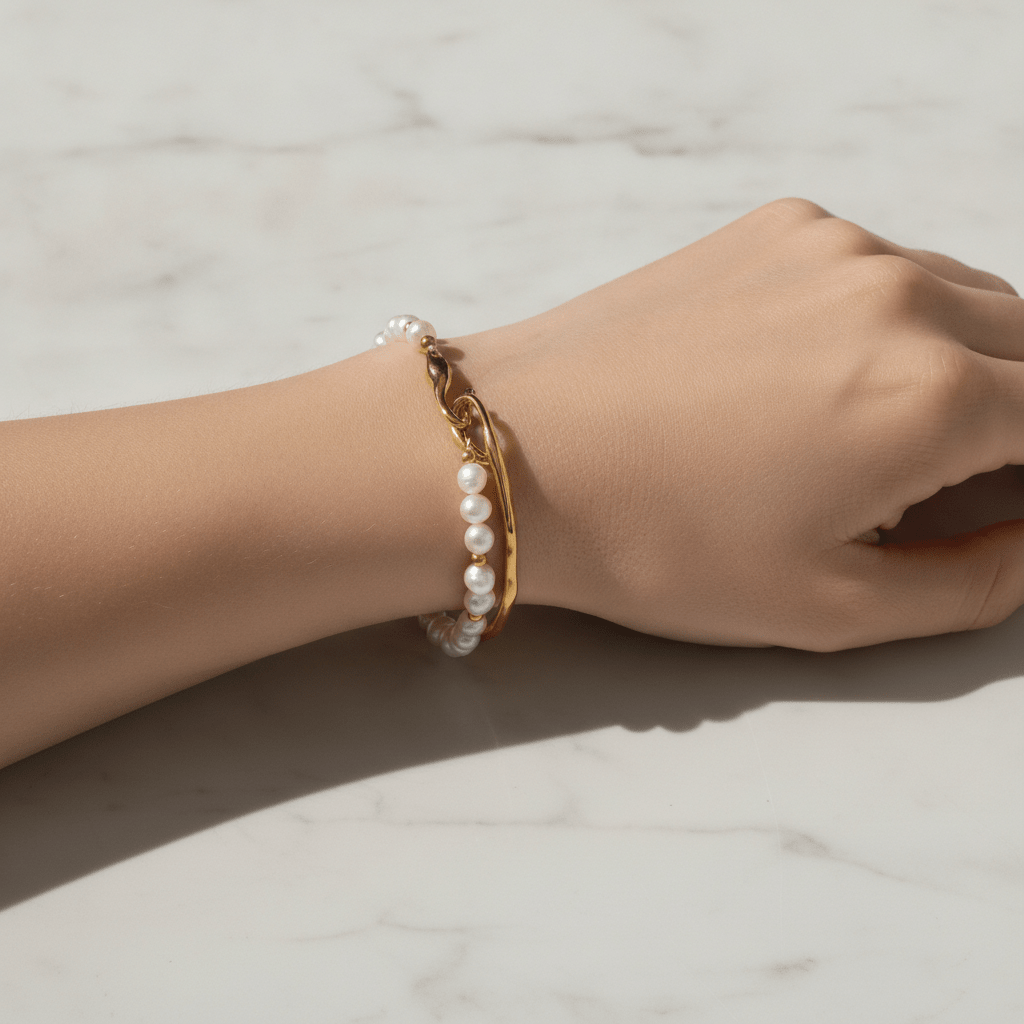
| Stainless steel bracelet with pearls, Lilianne model | Stainless steel, pearls | Twice a month | Lukewarm soapy water, dry immediately |
| Crystal bracelet, sparkling colors, for women, Christelle model | Crystal, metal | Weekly | Damp microfiber cloth |
| Bracelet with natural pearls, "infinity" motif set with zirconia, Mélissa model | Natural pearls, zirconia | After each wear | Soft cloth, never immerse |
| Cord bracelet for men, silver whale tail, Diego model | Cord, silver-plated metal | Monthly | Metal part: silver polishing cloth |
Protecting your silver bracelets: essential preventive measures
Optimal storage to prevent oxidation
Proper storage is half the work of maintaining your silver jewelry. The main enemies are air and humidity, so isolate each bracelet in an individual anti-tarnish fabric pouch. These pouches, often gray or black, are impregnated with compounds that absorb sulfur agents before they reach the metal. If unavailable, a simple airtight plastic bag with the air expelled is an acceptable alternative.
Avoid storing several silver pieces together without protection. Friction between items causes scratches, and clasps or decorative elements can catch and damage each other. A jewelry box with compartments, lined with velvet or soft fabric, provides ideal storage. Add a small silica gel packet (like those found in new shoe boxes) to absorb residual moisture and slow down oxidation.
Protective daily habits
Adopt the "jewelry last on, first off" habit. Put on your silver bracelets after applying all your cosmetics and waiting for them to be fully absorbed. Conversely, remove them first before your evening skincare routine. This simple habit greatly reduces exposure to the chemical agents responsible for accelerated tarnishing. Allow perfumes and creams to dry for at least ten minutes before putting on your jewelry.
Always remove your bracelets before certain activities: showering, bathing, swimming, housework, cooking, sports, and gardening. Chlorinated pool water is especially harsh on silver, as is seawater saturated with salt. Household chores expose your jewelry to chemicals and impacts. Intense perspiration from sports accelerates oxidation. Taking a few seconds to remove and store your bracelet will save you hours of cleaning or prevent irreversible damage.
Special cases: caring for silver bracelets with stones or pearls
Bracelets adorned with crystals and zirconia
Bracelets combining silver with decorative stones, such as the stunning Crystal Bracelet, with sparkling colors, for women, Christelle model, require special attention. Crystals and zirconia are generally durable but can scratch each other or accumulate deposits that dull their shine. Clean them with a slightly damp microfiber cloth, avoiding prolonged soaking that could weaken the settings.
Stones set with prongs or bezel settings can withstand more thorough cleaning than glued stones. Regularly check the security of the settings by gently running your fingernail around each stone. Any movement or clicking sound indicates a weakened setting that requires a jeweler’s intervention before the stone is lost. Absolutely avoid methods using heat (boiling water, hair dryer) on set jewelry.
Bracelets with natural pearls
Pearls, whether freshwater or cultured, are among the most delicate elements in jewelry. Their organic surface, made of nacre, reacts very poorly to acidity, chemicals, and even prolonged exposure to water. A bracelet like the Natural Pearl Bracelet, infinity motif set with zirconia, Mélissa model requires specific care that preserves both the silver and the pearls.
After each wear, gently wipe the pearls with a soft cloth slightly dampened with clean water, then dry them immediately. Never use cleaning products, even those intended for silver, directly on the pearls. If the silver part requires thorough cleaning, protect the pearls by wrapping them in plastic wrap or entrust the bracelet to a professional. Pearls benefit from being worn regularly: the skin’s natural oils help maintain their luster.
When to consult a professional
Warning signs to look out for
Some situations go beyond what can be handled with at-home care and require the expertise of a professional jeweler. If your bracelet has deep scratches visible to the naked eye, amateur polishing may worsen the damage. Likewise, persistent tarnishing despite several cleaning attempts may indicate a deeper issue, such as an alteration of the alloy or a defect in the surface rhodium plating.
Structural damage requires professional intervention: broken link, faulty clasp, loose stone, or a pearl moving on its thread. Attempting to repair these problems yourself may cause further damage. A jeweler has the tools, materials, and expertise needed to restore your bracelet according to the highest standards, often at a modest cost compared to the sentimental and aesthetic value of the jewelry.
Professional maintenance services
Jewelers offer several maintenance services for silver bracelets. Professional ultrasonic cleaning removes embedded impurities from every nook and cranny thanks to the high-frequency vibrations of a special bath. This technique, particularly effective on bracelets with complex links, is not suitable for jewelry adorned with pearls, emeralds, or opals, which are too fragile to withstand the vibrations.
Rhodium plating is an interesting option for silver bracelets that are very tarnished or slightly scratched. This technique involves applying a thin layer of rhodium, a metal from the platinum group, to the surface of the silver. Rhodium, harder and more resistant to oxidation than silver, offers exceptional shine and lasting protection. This treatment, to be renewed every two to five years depending on wear, gives tired jewelry a new lease on life.

FAQ: your questions about caring for silver bracelets
How often should I clean my silver bracelet?
For a bracelet worn daily, wipe it with a soft cloth after each use. Clean it with soapy water once a week and perform a deep cleaning (baking soda or specialized product) once a month. Bracelets worn occasionally should be cleaned before each use and stored carefully in an anti-tarnish pouch.
Can I wear my silver bracelet in the shower?
It is strongly discouraged to wear a silver bracelet in the shower. Water, especially hot water, accelerates oxidation. Soaps and shampoos leave residues that dull the metal. Residual moisture after showering promotes the development of sulfuration. Make it a habit to remove your jewelry before any contact with water.
How can I tell if my bracelet is solid silver or silver-plated?
Sterling silver 925 (or sterling) usually bears a "925", "Sterling" hallmark or a Minerva head in France. If you do not find a hallmark, have the jewelry examined by a professional. The reaction to oxidation differs: solid silver tarnishes evenly, while plated silver may reveal the base metal in areas of wear.
Can vinegar damage my silver bracelet?
When used correctly and diluted, white vinegar is not dangerous for solid silver. However, prolonged exposure or the use of concentrated vinegar could damage fragile alloys or delicate finishes. Limit soaking time to a maximum of two hours and always rinse thoroughly. Avoid this method on jewelry with pearls or stones sensitive to acidity.
My bracelet tarnished very quickly, is this normal?
Rapid tarnishing can have several causes. Your body chemistry (sweat acidity) may react strongly with silver. Also check your exposure to cosmetics, medications, or polluted environments. Some lower-quality silver alloys tarnish more quickly. If the problem persists despite precautions, consult a jeweler to assess the quality of the metal.
Can you use glass cleaner to clean silver?
No, glass cleaners contain ammonia and other chemicals that are unsuitable for jewelry. These substances can cause unwanted reactions with silver or damage stones and other decorative elements. Only use products specifically designed for cleaning silver jewelry or the proven natural methods described in this guide.
Take care of your precious jewelry
Regular care of your silver bracelets for women requires minimal time investment for spectacular long-term results. By adopting the right cleaning and storage habits, you will preserve the shine and beauty of your jewelry for many years. La Boutique du Bracelet supports you in this process with expert advice and a selection of quality bracelets, designed to stand the test of time with elegance.
Whether you prefer the clean lines of a delicate bracelet like the Zena model in gold-plated titanium or the elegant pearl-adorned style of the Lilianne model in stainless steel, each piece of jewelry deserves special care tailored to its materials. Feel free to browse our complete collection to find the bracelet that will enhance your wrist and become your faithful companion for your most beautiful occasions.