Labradorite Stone Identity Sheet
- Name Origin: Labradorite takes its name from the Labrador Peninsula in Canada, where it was first discovered in the 18th century.
- Group: It belongs to the feldspar family, a group of minerals that forms a significant part of the Earth's crust.
- Chemical Composition: The chemical formula of labradorite is (Ca,Na)(Al,Si)₄O₈, indicating that it contains calcium, sodium, aluminum, and silicon.
- Crystal System: Labradorite crystallizes in the triclinic system, which contributes to its unique labradorescence patterns.
- Hardness: It has a hardness of 6 to 6.5 on the Mohs scale, making it relatively resistant to scratches but prone to chipping if mishandled.
- Deposits: Although discovered in Labrador, it is also found in Australia, Madagascar, Mexico, Russia, the United States, and other parts of the world.
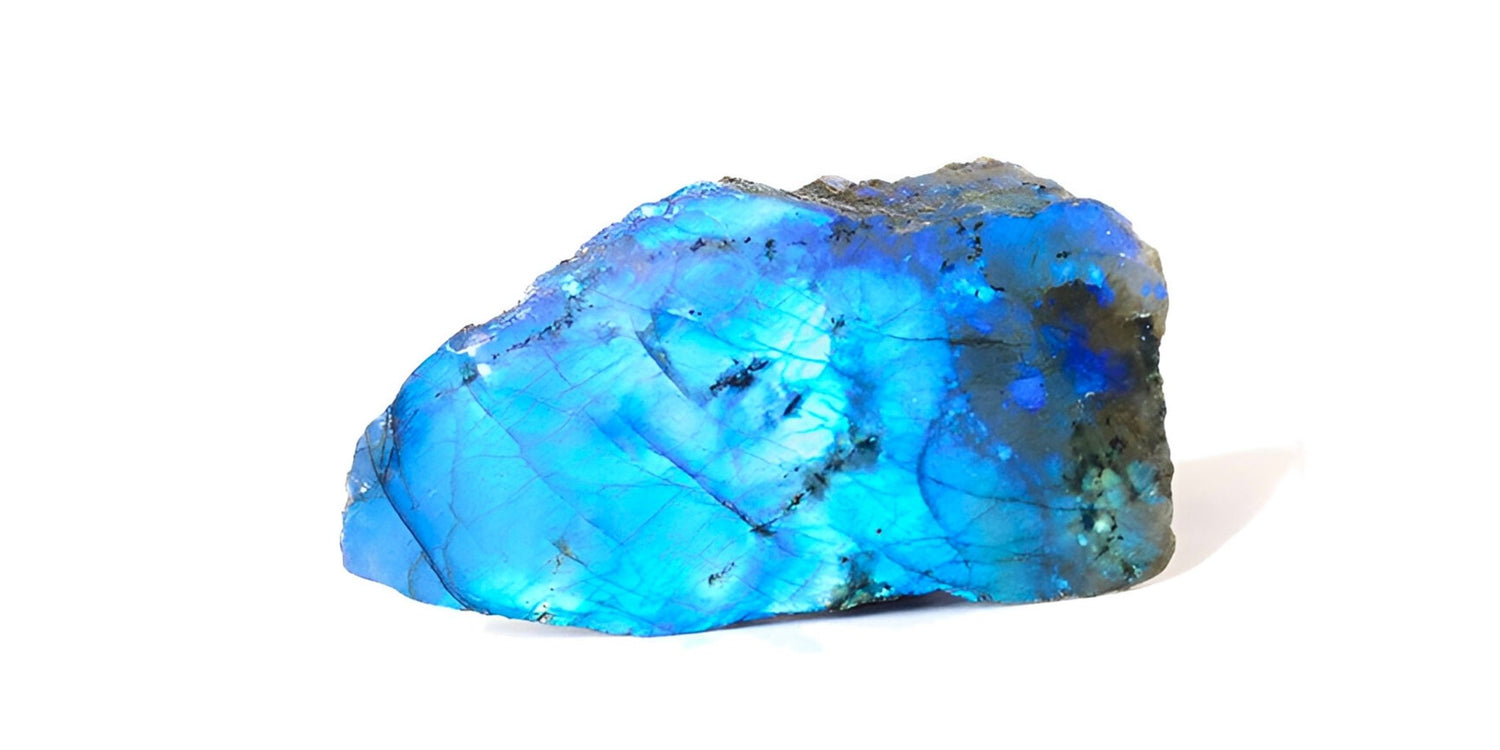
- Color(s): Labradorite is famous for its spectrum of iridescent colors, ranging from blue, green, and gold to sometimes even violet, depending on the angle of view.
- Chakras: It is associated with the third eye chakra and the throat chakra, promoting intuition, creativity, and communication.
Where does the name Labradorite come from?
Geographical Origin and Discovery
Labradorite, a captivating stone known for its spectacular iridescence, owes its name to the region where it was first discovered: the Labrador Peninsula, located in Canada. This discovery, which occurred at the end of the 18th century, marked the beginning of worldwide fascination with this unique mineral. The Labrador region, with its wild and unspoiled landscapes, has given the world one of its most enchanting gems, thus anchoring the name labradorite in the lexicon of precious stones.
Etymology and Meaning
The term "labradorite" was officially adopted to designate this mineral after its initial discovery, directly reflecting its place of origin. This geographical designation not only highlights the importance of the discovery but also the connection to the natural beauty and mineral wealth of Canada. The name labradorite is therefore a tribute to the Labrador Peninsula, bearing witness to the hidden beauty within the depths of the Earth, ready to be revealed.
Unique Characteristics and Labradorescence
Labradorite is especially prized for its phenomenon of labradorescence—a play of iridescent colors that seems to dance on the surface of the stone when it is tilted or viewed from different angles. This visual display, ranging from deep blue and emerald green to golden and sometimes violet hues, evokes the aurora borealis, adding an almost magical dimension to this gem. This unique phenomenon greatly contributes to the renown and appeal of labradorite, echoing the mysteries and beauty of the region that gave it its name.
Cultural and Symbolic Resonance
Beyond its name and physical characteristics, labradorite has acquired significant cultural and symbolic meaning. The indigenous peoples of Canada, especially those near its region of origin, have long recognized the stone not only for its beauty but also for its spiritual traditions. Labradorite is often associated with symbolic protection, spiritual awakening, and the promotion of intuition and creativity. Its name, while referring to its geographical discovery, also evokes these mystical qualities and its connection to the natural world.
What is the history of Labradorite?
Discovery and Origins
Labradorite, a stone that captivates with its iridescent beauty, was discovered at the end of the 18th century on Paul Island, near the town of Nain, in the Labrador region of Canada. Its discovery immediately sparked great interest for its shimmering colors and unique brilliance, reminiscent of the northern lights so characteristic of northern skies. This initial identification marked the beginning of a worldwide fascination with labradorite, propelling this modest stone to the status of a precious and sought-after gem.
A Stone of Mystical Beauty
Labradorite is known for its phenomenon of labradorescence, which offers a display of iridescent colors ranging from blue and green to gold, depending on the angle of the light. This play of colors is due to the stone's unique internal structure, which refracts light into a multitude of luminous shades. This characteristic has not only fascinated scientists and gemologists but has also captivated artists and gemstone enthusiasts around the world.
Symbolism and Traditions
Beyond its beauty, labradorite is surrounded by rich folklore and attributed to many traditions. Indigenous peoples of Canada considered it a symbolic stone, often associated with intuition and protection. It is reputed to foster creativity, intuition, and provide symbolic protection. These beliefs, along with its connection to the Northern Lights, have given labradorite a profound spiritual and mystical dimension.
Global Expansion and Popularity
The discovery of new labradorite deposits in Finland, Madagascar, Australia, and other locations has helped increase its availability and popularity worldwide. Each deposit offers unique variations of this stone, ranging from Finnish spectrolite, renowned for its exceptionally rich color spectrum, to the blue labradorite from Madagascar, especially prized for its deep blue hue.
Uses and Applications
Labradorite is widely used in jewelry, where it is prized for its ability to capture and reflect light in a way that enhances the beauty of the wearer. It is also used in decorative objects, sculptures, and even in certain cultural traditions, where it is valued for its symbolism.
What is the origin and composition of Labradorite?
Geological Origin of Labradorite
Labradorite, a stone with spectacular iridescence, owes its name to the Labrador region of Canada, where it was first discovered at the end of the 18th century. This fascinating stone was born from magmatic activity, formed from basalt and other mafic rocks as they cooled. This volcanic origin created the ideal conditions for the formation of labradorite and its unique play of colors.
Chemical Composition and Crystalline Structure
Chemical Composition
Labradorite is a mineral from the plagioclase feldspar group, whose chemical composition varies between that of albite (NaAlSi3O8) and anorthite (CaAl2Si2O8). Its general chemical formula can be expressed as (Ca,Na)(Si,Al)4O8, where sodium (Na) and calcium (Ca) can substitute for each other within the stone's crystalline structure.
Crystal Structure
Labradorite crystallizes in the triclinic system, characterized by lower symmetry compared to other minerals. This structure is crucial for the phenomenon of labradorescence, as it allows light to diffuse through fine internal layers, thus creating the characteristic colorful reflections of this stone.
The Labradorescence Phenomenon
The most remarkable feature of labradorite is undoubtedly its labradorescence, the optical effect that gives the stone its iridescent colors. This effect is due to the diffraction of light on tiny inclusions within the stone, often caused by variations in mineralogical composition and crystal size within the stone. The perceived colors vary depending on the viewing angle, ranging from blue, green, to gold and sometimes even violet.
Labradorite Deposits
Although labradorite is named after the Canadian region where it was first discovered, significant deposits of this stone have also been found in other parts of the world. Madagascar, Australia, Norway, Mexico, and Finland are among the countries that host important labradorite deposits, each offering unique variations in color and quality of labradorescence.
Uses and Value
Labradorite is widely appreciated in jewelry and interior decoration for its attractive appearance and unique play of colors. It is also valued in certain spiritual practices and cultural traditions for its reputed protective symbolism.
What is the symbolism of Labradorite?
Labradorite, a gemstone with iridescent reflections, is famous not only for its captivating appearance but also for the rich symbolism traditionally associated with it. This stone, valued for its mystical beauty and symbolism, is often cherished in cultural traditions and popular beliefs.
Spiritual and Emotional Symbolism
Symbol of Intuition
Labradorite is particularly renowned for its symbolism linked to intuition, offering the wearer a better understanding of their own thoughts and feelings. It encourages deep introspection and helps navigate the complex flow of emotions and ideas.
symbolic protection
Considered a protective stone, labradorite symbolizes a shield around the wearer, representing the distancing of undesirable influences. It helps maintain a positive attitude and emotional harmony in the face of adversity.
Inspiration and Creativity
Labradorite is also known to symbolize creativity, unleashing the flow of ideas and inspiring new ways of thinking. It is particularly beneficial for those seeking to break through creative blocks or explore new artistic horizons.
Traditions Linked to Well-being
Symbol of Serenity
On a physical level, labradorite is often used in the pursuit of serenity. It helps to instill a sense of calm and tranquility, which can represent an ideal of daily harmony.
Allegory of Rest
Labradorite can also be seen as a symbol of rest. Its mystical beauty is often associated with the idea of a serene mind, metaphorically representing nighttime tranquility.
Symbol of Resilience
This stone is often recommended as a symbol of support during times of change or transition. It helps to symbolize resilience and endurance, metaphorically representing support in adapting to new circumstances.
How to care for your Labradorite stone jewelry?
Labradorite jewelry, with its captivating iridescence and depth of color, are natural treasures that deserve special attention to preserve their beauty and brilliance. Here is how to care for your labradorite jewelry, along with an invitation to discover our exclusive collections of bracelets for women and men.
Gentle Cleaning
Using Lukewarm Water and Mild Soap
Labradorite should be cleaned with care to avoid damaging its delicate surface. Use lukewarm water and a little mild soap, avoiding harsh chemicals that could dull its shine. Gently rub with a soft cloth or a soft-bristled brush to remove accumulated dirt.
Drying and Polishing
After cleaning, be sure to carefully dry your labradorite jewelry with a soft cloth to avoid any water marks. Gentle polishing can help restore the stone's natural shine.
Daily Precautions
Avoid Shocks and Scratches
Labradorite, although quite durable, can be prone to scratches and impacts. It is advisable to remove your labradorite jewelry during intense physical activities or when using chemicals to protect them.
Protection from Extremes
Extreme temperature variations and prolonged exposure to sunlight can affect the labradorescence of the stone. It is best to keep your labradorite jewelry away from these conditions to preserve their beauty.
Storage and Care
Separate Storage
To avoid scratches, store your labradorite jewelry separately from other jewelry, in a soft fabric pouch or a jewelry box. This will also protect them from dust and potential damage.
Regular Inspection
Regularly inspect your labradorite jewelry for any signs of wear or damage, and consult a professional for any necessary repairs. This will ensure your jewelry remains in perfect condition for years to come.
Discover Our Collection
Women's Labradorite Stone Bracelets
Explore our collection of women's labradorite bracelets, where each piece is a celebration of the mystical beauty of this stone. Our bracelets are designed to complement both your personal style and your look, making them the perfect accessory for any occasion.
Men's Labradorite Stone Bracelets
Our collection of men's labradorite bracelets offers robust and elegant designs, ideal for those looking to add a touch of mystery and elegance to their daily life. Each bracelet is carefully crafted to highlight the uniqueness of labradorite, while offering an inspiring style.
The information presented in this article is provided for cultural and informational purposes, with reference to the traditions and beliefs associated with stones. It does not constitute medical advice, a diagnosis, or a promise of results. Our bracelets are fashion jewelry and are not health devices. If you have a health problem, please consult a qualified healthcare professional.