Onyx Stone Identity Card
- Origin of the name: The name "onyx" comes from the Greek word "onyx," meaning "nail" or "claw," referring to the legend in which Cupid cut the divine nails of Venus with an arrow while she slept, and the gods transformed these nails into stone so they would never perish.
- Group: Quartz (Silicates).
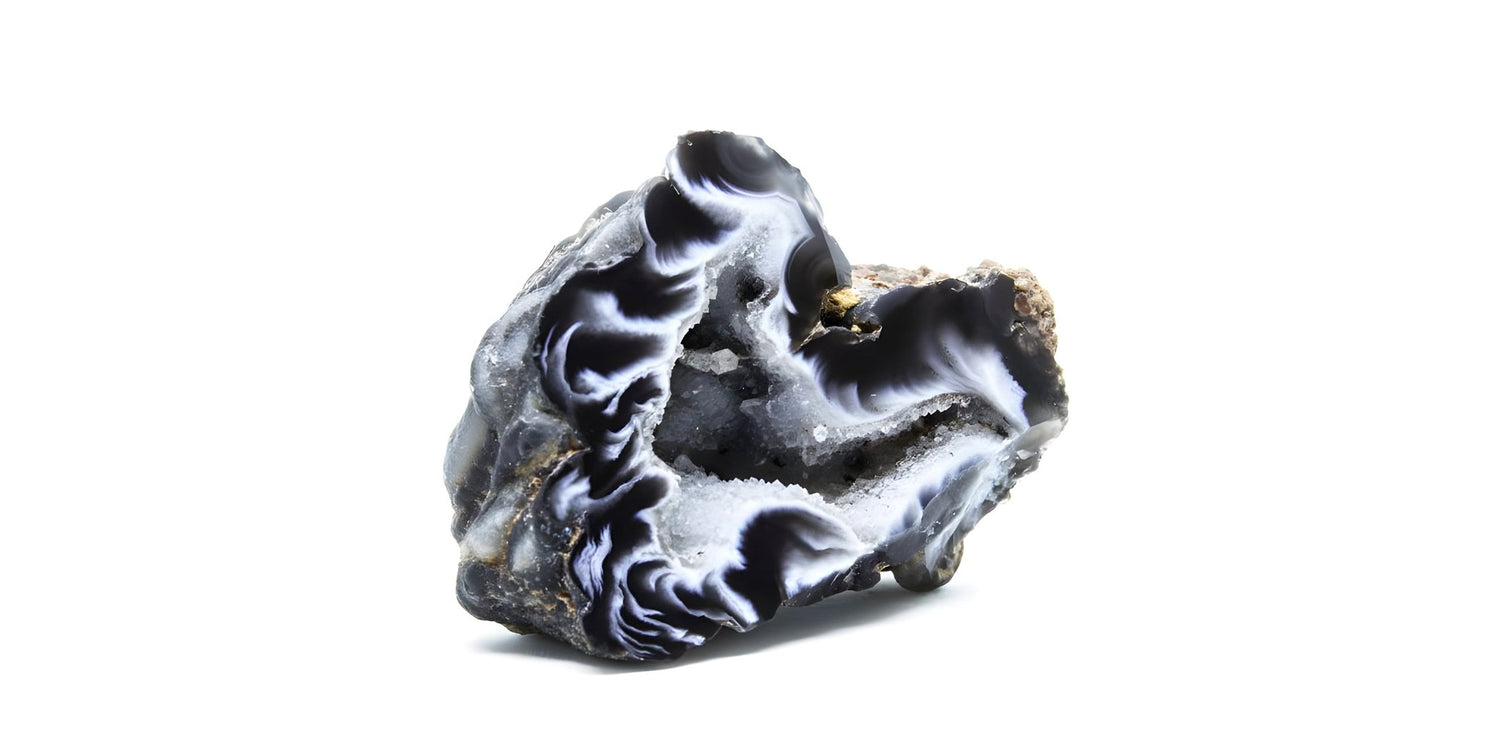
- Chemical composition: SiO2 (silicon dioxide), onyx is a form of agate quartz, characterized by its alternating colored bands.
- Crystal system: Rhombohedral.
- Hardness: 6.5 to 7 on the Mohs scale, making it quite durable for use in jewelry.
- Deposits: Onyx is mainly found in Brazil, India, Madagascar, Mexico, Uruguay, and the United States.
- Color(s): Although black onyx is the most famous, this stone can display white, gray, blue, red, and yellow bands. Pure black onyx is rare; most samples show alternating colored bands.
- Symbolic centers: Onyx is mainly associated with the root chakra (Muladhara), promoting grounding, strength, and stability.
Onyx is a powerful stone, renowned for its symbolism of protection and its ability to represent strength and support in difficult situations, encouraging vigor, stability, and endurance.
Where does the name Onyx come from?
The name "onyx" intrigues and fascinates, evoking the mysterious depths and dark brilliance of the stone it designates. But where does this name actually come from, and what story lies behind this term that has crossed the ages to reach us today? Let us delve into the origin of the name onyx to discover the rich heritage of this captivating gem.
Ancient and Etymological Origins
The word "onyx" originates from ancient Greek, deriving from the word "ὄνυξ," which means "nail" or "claw." This name has its roots in an ancient Greek legend, which tells how Cupid, the god of love, cut the divine nails of the goddess Venus while she slept. The gods, not wanting these divine nails to be corrupted on earth, transformed them into stone, thus giving birth to onyx.
Symbolism and Meaning
This mythological origin gives onyx a strong symbolic dimension, linking it to beauty, love, and transformation. In antiquity, the onyx stone was therefore considered to have protective and lucky symbolism, due to its divine connection. Its association with the image of the nail also suggests an idea of strength and resilience, qualities that have long been associated with onyx.
Onyx Through the Ages
Over the centuries, onyx has been used and valued in many cultures, from the ancient Egyptians to the Romans, including Greek civilizations. Each culture interpreted and used onyx in its own unique way, whether for engravings, protective amulets, or as decorative elements. However, the name "onyx" has endured, passing through the ages as a testament to humanity's ongoing fascination with this stone.
Varieties and Colors
Although onyx is often associated with its black variety, the stone can display a range of colors, including white, red, or brown bands. The name "onyx," however, has remained primarily linked to the image of the black stone, a symbol of elegance and mystery. The different colors of onyx add to the richness of its history and to the diversity of meanings and uses attributed to this stone over time.
What is the history of the Onyx stone?
Onyx, with its deep hues and contrasting color bands, is a stone that evokes mystery and elegance. Its rich and varied history spans civilizations, bearing witness to its importance and value through the ages. From Antiquity to the present day, onyx has captivated the imagination of peoples, becoming a symbol of protection, strength, and beauty.
Ancient Civilizations and Beliefs
The use of onyx dates back to ancient Egypt, where it was used to create pots and bowls, as well as amulets believed to protect the dead in the afterlife. The Romans, for their part, engraved seals and cameos in onyx, valuing its ability to create a striking contrast between layers of color. For the Greeks, onyx was associated with the legend of Eros (Cupid) cutting the divine nails of the goddess Aphrodite, symbolizing transformation and eternity.
Middle Ages and Renaissance
In the Middle Ages, onyx was often used to create religious objects, such as crucifixes and rosaries, due to its protective symbolism against evil spirits. During the Renaissance, onyx gained popularity as a material for cameos and intaglios, reflecting the era's taste for classical art and mythology, and showcasing the craftsmanship of artisans of the time.
Symbolism and Meanings
Throughout history, onyx has been credited with many symbolic meanings. It was considered a stone of vigor, offering strength and support in difficult times. Its dark appearance was also associated with protection against perceived negative influences, making onyx a prized talisman for personal defense. Additionally, onyx is believed to stimulate self-discipline, helping those who wear it achieve greater emotional and mental stability.
Onyx in Modern Cultures
Today, onyx continues to be a prized gemstone in jewelry, appreciated for its unique aesthetics and rich symbolism. Its shades, ranging from deep black to marbled white, with various intermediate colors, make it a versatile and elegant stone. Onyx is also used in interior decoration, where it adds a touch of sophistication and mystery.
What is the origin and composition of Onyx stone?
Onyx, a stone of deep mysteries and captivating beauty, has fascinated humanity since antiquity. Its unique composition and geological origin give it a special place among gemstones. Let us explore the secrets of onyx, from its millennia-old formation to its complex structure that captivates the eye.
Geological Origin
Onyx is a variety of chalcedony, which belongs to the quartz family. It forms from silica deposits in volcanic rock cavities or in ancient river and lake beds. These deposits accumulate in layers, creating the characteristic parallel bands of onyx. This layered formation is the result of repeated episodes of dissolved silica seeping into these cavities and hardening over time. Onyx is distinguished by its contrasting color bands, often in black and white, but it can also display a range of colors including red, brown, and green.
Chemical Composition
The chemical formula of onyx is SiO2, indicating that it is composed of silicon dioxide. This composition is typical of quartz, but onyx is distinguished by its unique crystalline structure and colored bands. The different colors of onyx are due to mineral impurities present during its formation. For example, the presence of iron and carbon can give onyx its rich black hues, while manganese can contribute to pink or red shades.
Formation Process
The formation process of onyx begins with water saturated with silica under specific geological conditions. When this silica-rich solution penetrates the cavities of the host rock, it begins to crystallize, first forming quartz, then chalcedony in successive layers. Variations in the composition of the siliceous solution, as well as environmental conditions such as temperature and pressure, contribute to the formation of the distinctive bands of onyx.
Main Deposits
The main onyx deposits are found in geologically active regions where conditions have favored the formation of chalcedony. These regions include Brazil, India, Madagascar, Mexico, Uruguay, Armenia, and the United States, among others. Each deposit produces onyx with unique characteristics, depending on local minerals and formation conditions.
What are the symbolic meanings of Onyx (physical and psychic)?
Onyx, this fascinating stone with its deep black color and mysterious bands, is much more than a simple aesthetic gem. Throughout the ages, it has been attributed with many symbolic meanings, both physical and psychic, making it precious for those seeking to benefit from its protective traditions.
Physical Symbolism of Onyx
On a physical level, onyx is recognized for its positive symbolism. It is said to help strengthen overall well-being, thereby increasing resistance to infections and illnesses. This stone is also believed to have a stabilizing effect on people experiencing imbalances, helping to symbolize the flow of life.
Moreover, onyx is often used to support vitality and dental health, thanks to its ability to symbolize harmony. It can also provide support in cases of discomfort, by improving the function of the inner ear.
Psychic and Emotional Symbolism
Onyx excels particularly in the realm of psychic and emotional symbolism. It is renowned for symbolizing strength and support during periods of physical and mental stress, helping to overcome challenges and fears. By acting as an emotional stabilizer, onyx helps maintain a calm and serene state of mind, thus promoting better management of negative emotions such as sadness and anxiety.
This stone is also known for enhancing concentration and determination, making it a valuable ally for those seeking to achieve their goals with perseverance and discipline. Onyx stimulates a sense of responsibility and decision-making, helping to clarify thoughts and focus energy productively.
Protection and Grounding
One of the most famous symbolisms of onyx is its ability to offer protection and grounding. By forming a shield against perceived negative influences, it protects its wearer from harmful influences and psychic attacks. Onyx is also valued for its grounding properties, helping to root the individual in the present moment and strengthen their connection to physical reality.
How to Care for Your Onyx Stone Jewelry?
Onyx jewelry, with its elegant black beauty and mysterious depth, is not only a fashion accessory; it is also imbued with meaning and symbolism. To preserve their shine and symbolism, it is essential to care for them properly. Here are some tips for taking care of your onyx jewelry, along with an invitation to discover our exclusive collections of onyx bracelets for men and women.
Gentle Cleaning
Onyx, although durable, requires gentle cleaning to maintain its shine. Use a soft, slightly damp cloth to clean the surface of your onyx jewelry. Avoid harsh chemicals or prolonged soaking in water, as these could damage the stone or alter its luster. Regular cleaning will help preserve the natural beauty of onyx and remove any buildup of dirt or residue.
Avoid Extreme Exposures
Onyx jewelry should be protected from extreme exposures, such as prolonged direct sunlight, high temperatures, and very humid environments. These conditions can affect the color and quality of the stone. It is also advisable to remove your onyx jewelry before engaging in intense physical activities or using household chemicals.
Careful Storage
To avoid scratches and damage, store your onyx jewelry separately from other stones and metals in your collection. Using soft fabric pouches or individual compartments in a jewelry box can provide optimal protection. Careful storage will preserve the integrity of your onyx jewelry, ensuring its longevity.
Symbolic Recharging and Purification
Lovers of lithic tradition suggest regularly recharging and symbolically purifying natural stone jewelry such as onyx to maximize its symbolism. You can recharge onyx by placing it on a cluster of quartz or briefly exposing it to moonlight. Symbolic purification can be performed by gently passing the stone through sage smoke or using harmonizing sounds.
Discover Our Collection
After caring for your precious onyx jewelry, why not enrich your collection with elegantly designed pieces to complement your style? We invite you to discover our collection of women's onyx stone bracelets, combining sophistication and protective symbolism, as well as our collection of men's onyx stone bracelets, featuring masculine designs imbued with strength. Each bracelet is carefully selected for its quality and aesthetics, offering a touch of refinement and a deep connection to the properties of onyx.
By taking care of your onyx jewelry and exploring our exclusive collections, you not only celebrate the timeless beauty of this stone but also its heritage of protection and inner strength.
The information presented in this article is provided for cultural and informational purposes, referencing the traditions and beliefs associated with stones. It does not constitute medical advice, a diagnosis, or a promise of results. Our bracelets are fashion jewelry and are not health devices. If you have a health problem, please consult a qualified healthcare professional.